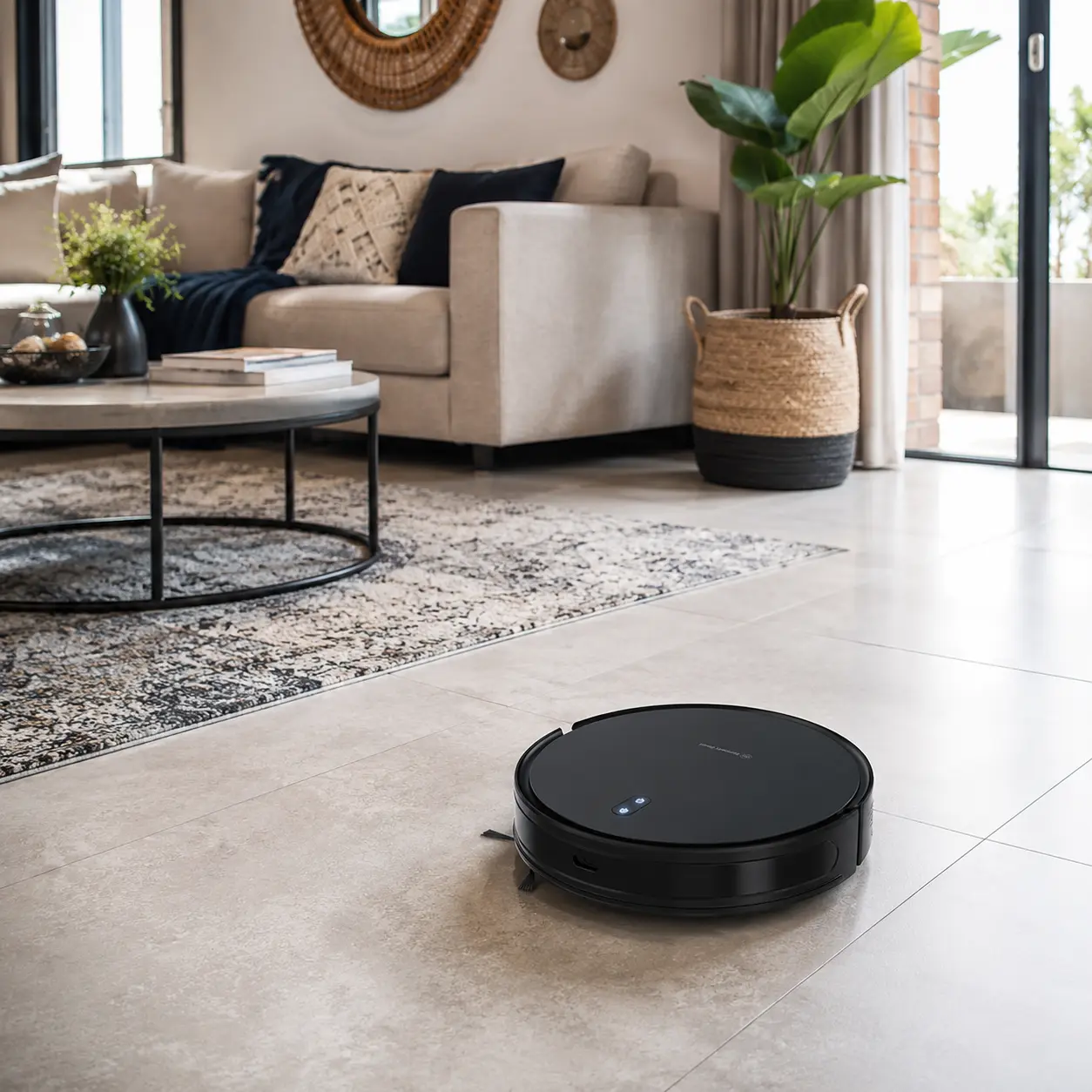
 Robot vacuums have gone from novelty to genuinely useful household appliance in a relatively short time.
But South African homes have some specific characteristics that are worth considering before you invest. Open-plan living areas, predominantly tiled floors, pets, dust and the realities of load shedding all affect how well a robovac performs in practice.
The short answer is yes , robot vacuums handle South African homes very well, and in some ways they are better suited to local conditions than they are to the carpeted, multi-storey homes they were originally designed around.
Here is why.
What You Will Find in This Article
- What South African homes are typically like and why it matters for robot vacuums
- How robot vacuums perform on tiled floors, with pets and in open-plan spaces
- What to consider about load shedding and scheduling
- The Bennett Read Alphabot and Alphabot Ultra compared
- Whether a robot vacuum is actually worth buying
What Are South African Homes Actually Like?
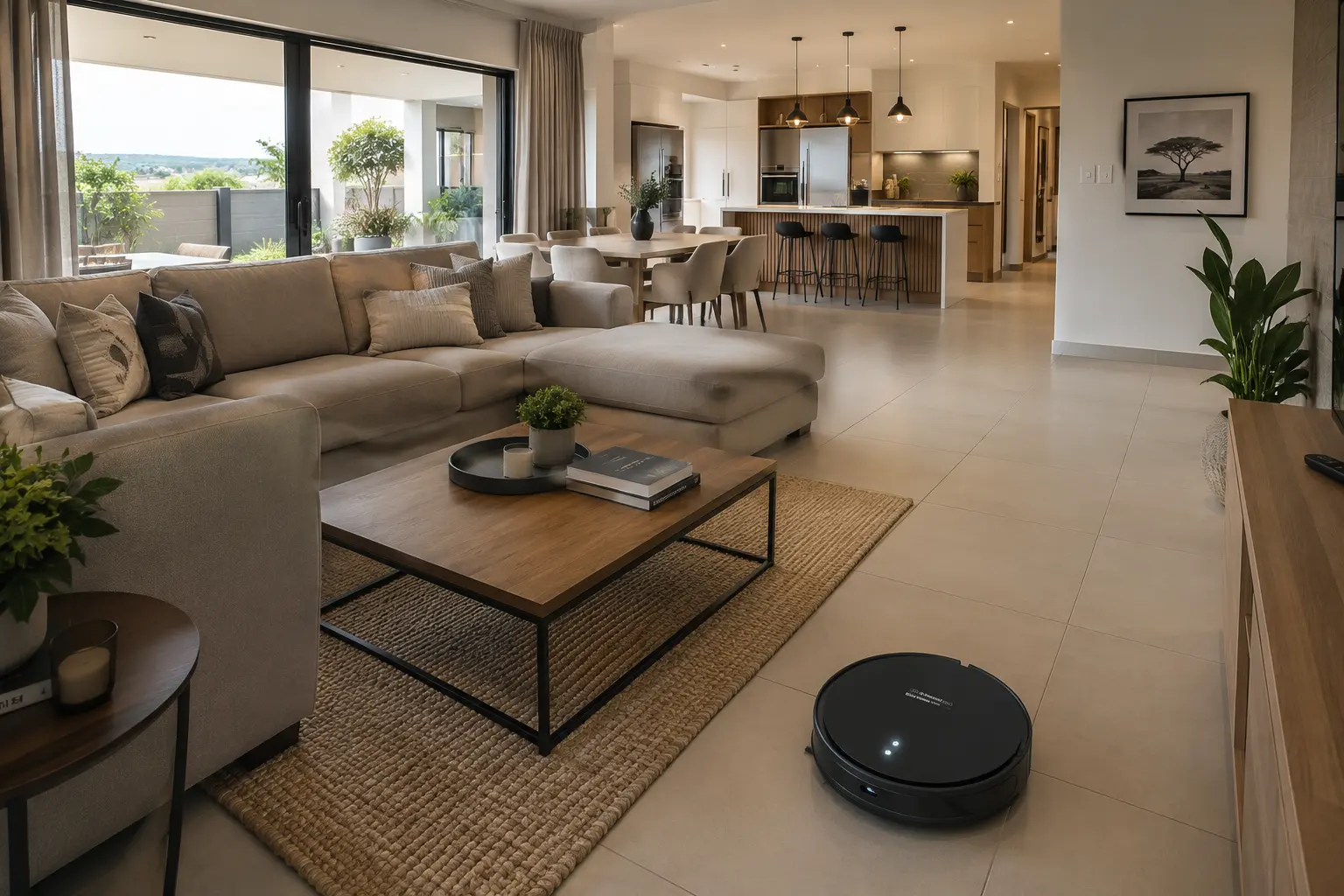 South African homes vary significantly by region, age and size, but a few common characteristics stand out.
Most homes, particularly those built in the last thirty years, feature tiled or sealed hard floors throughout the main living areas. Carpets, where they exist, are typically confined to bedrooms.
Open-plan kitchen, dining and lounge configurations are common in both townhouses and freestanding homes.
Dust levels can be high, particularly in the Highveld during dry winter months and in coastal areas with sandy surrounds.
Pet ownership is widespread, and pet hair on hard floors is a daily reality for a large proportion of households.
These conditions are, in most respects, close to ideal for a robot vacuum.
- Hard floors are significantly easier for robovacs to navigate and clean than deep-pile carpet.
- Open-plan layouts with minimal furniture legs and clear floor space allow robot vacuums to cover large areas efficiently.
- The combination of dust and pet hair is exactly the problem these machines were designed to solve.
How Robot Vacuums Perform in South African Conditions
On tiled and sealed floors, robot vacuums perform exceptionally well .
The combination of side brushes sweeping debris towards the suction inlet and a main brush or suction channel extracting it is highly effective on smooth, hard surfaces.
In homes where the primary daily cleaning need is dust and pet hair on tiles, a robot vacuum can replace the daily sweeping or vacuuming almost entirely.
Dust and Filtration
Dust is where suction power and filtration matter most.
The Bennett Read Alphabot Ultra offers up to 5000Pa of suction across four cleaning modes, which is more than sufficient for fine Highveld dust and pet dander on hard floors.
HEPA filtration on both Alphabot models ensures that the air returned to the room is cleaner than the air that went in, which is particularly relevant for households with allergy sufferers or asthmatic children.
Cleaning Different Areas
For homes with both hard floors and bedroom carpets, the Alphabot Ultra's laser navigation and multi-map capability allow you to create separate maps for different areas of the house and schedule cleaning zones independently.
You can send it to the bedrooms in the morning and the living areas in the afternoon without lifting a finger.
What About Load Shedding?
Load shedding is a genuine consideration for any smart home appliance in South Africa.
Both the Alphabot and Alphabot Ultra are WiFi-dependent for app control and scheduling, running only on 2.4GHz networks.
During load shedding:
- The robot will not operate on a schedule while the power is off.
- It will need to return to its dock to recharge once power is restored before completing a cleaning cycle.
The Alphabot Ultra handles this more gracefully than most.
With a 3200mAh battery and up to 180 minutes of run time in Eco mode, it can complete a full clean of a medium to large home on a single charge.
Critically, if the battery runs low mid-cycle, it returns to the dock, recharges and resumes exactly where it left off.
This means a load shedding interruption during a cleaning cycle is handled automatically rather than requiring you to restart manually.
The Bennett Read Alphabot vs Alphabot Ultra
Bennett Read Alphabot
The straightforward entry point into robot vacuuming.
Features include:
- Brushless motor technology for quieter operation
- HEPA filtration to capture fine dust and allergens
- Smart Life app for scheduling and cleaning mode selection
- Self-charging auto-dock
- Reliable performance for everyday dust and pet hair on hard floors
Bennett Read Alphabot Ultra
A significant step up in capability.
Key features include:
- Laser navigation
- Multiple saved floor maps
- Precise zone-based cleaning
- 2-in-1 dustbin and water tank
- Simultaneous vacuuming and wet mopping
- 5000Pa suction
- Advanced anti-collision and fall-guard sensors
- Slimline profile for cleaning under furniture
- Up to 180 minutes of run time
This makes it the premium option for larger homes or households with higher cleaning demands.
So, Is a Robot Vacuum Worth It for a South African Home?
For the vast majority of South African households, yes.
The combination of predominantly hard floors, significant dust and pet hair, open-plan living areas and busy daily routines makes the robot vacuum a genuinely practical investment rather than a gadget.
It does not replace a deep clean or a weekly vacuum of carpeted areas, but as a daily maintenance tool it is hard to beat.
Coming home to clean floors without having done anything is a quality-of-life upgrade that quickly feels indispensable.
Register your product online to extend your warranty to two years at no extra cost.
FAQs
What are homes like in South Africa?
South African homes vary widely, but most modern homes feature tiled or sealed hard floors in the main living areas, with carpets typically limited to bedrooms.
Open-plan kitchen, dining and lounge configurations are common.
Dust levels can be high in the Highveld during dry winter months, and pet ownership is widespread.
These characteristics make South African homes particularly well-suited to robot vacuums, which perform best on hard floors and open layouts.
What are South African houses like?
South African houses range from compact townhouses and cluster homes to large freestanding properties, and from traditional face-brick construction to modern plaster and paint finishes.
Most are single-storey, which is ideal for robot vacuums.
Tiled floors are standard in newer builds.
Many homes have indoor and outdoor living areas, dogs and cats, and high dust levels during dry seasons, all of which a robot vacuum like the Bennett Read Alphabot is well-equipped to handle.
What is the best vacuum robot in South Africa?
The Bennett Read Alphabot Ultra is one of the most capable robot vacuums available in South Africa at its price point.
Features include:
- 5000Pa suction
- Laser navigation
- Multi-map zone cleaning
- Simultaneous vacuuming and mopping
- HEPA filtration
- Up to 180 minutes of run time
The standard Alphabot is an excellent entry-level option for smaller homes or straightforward daily maintenance cleaning.
Are robot vacuums actually worth it?
For most South African households, yes.
Robot vacuums are best understood as daily maintenance tools rather than replacements for a full deep clean.
They keep hard floors consistently free of dust, pet hair and debris between more thorough cleaning sessions.
For busy households, the time saved and the consistency of clean floors make a robot vacuum one of the most practical home appliances available, particularly given how well-suited local homes are to robovac navigation.