While there’s no consensus on an official number of cultures within South Africa, you just need to take a look at our 11 official languages to get an idea of how diverse our country is. Famously known as the rainbow nation, our country can be described as having a rainbow palate when you think about the colourful infusion of flavours to be explored in our melting pot of cultures. This Heritage Day, we’re celebrating the people and the palates within this beautiful nation by sharing some signature South African recipes. Rather than focusing on a recipe per culture, we’ll be sharing a handful of some of the most culturally distinct dishes that are commonly associated with SA cuisine. From Zulu and Cape Malay to Indian and Afrikaans, we have a great line up of traditional South African dishes for you. Take a look!
Culture: Cape Malay
About:
The Cape Malay culture in South Africa is a vibrant and distinctive part of the country's heritage, rooted in the descendants of enslaved and exiled people brought to the Cape from Indonesia, Malaysia, India, and East Africa during the 17th and 18th centuries by Dutch colonists. Centered primarily in Cape Town, particularly in areas like Bo-Kaap, the Cape Malay community is renowned for its rich Islamic traditions, colourful architecture, and influential cuisine — known for fragrant spices like cinnamon, cloves, cardamom, bay leaves, coriander (cilantro), cumin, turmeric, ginger, star anise, and nutmeg. The Cape Malay culture blends Eastern influences with African and European elements to create a unique and enduring cultural identity in South Africa.
A Traditional Dish: Bobotie
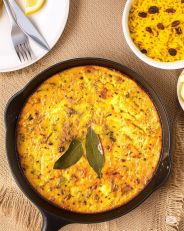
What it Tastes Like:
Bobotie has a unique and delicious flavour profile. It's a savoury dish with hints of sweetness and spiciness that are wonderfully balanced with a creamy and comforting egg-custard topping. It has a light and airy texture. The mince filling is seasoned with curry powder, spices like turmeric and cumin, and often includes ingredients like raisins, chutney, and dried apricots.
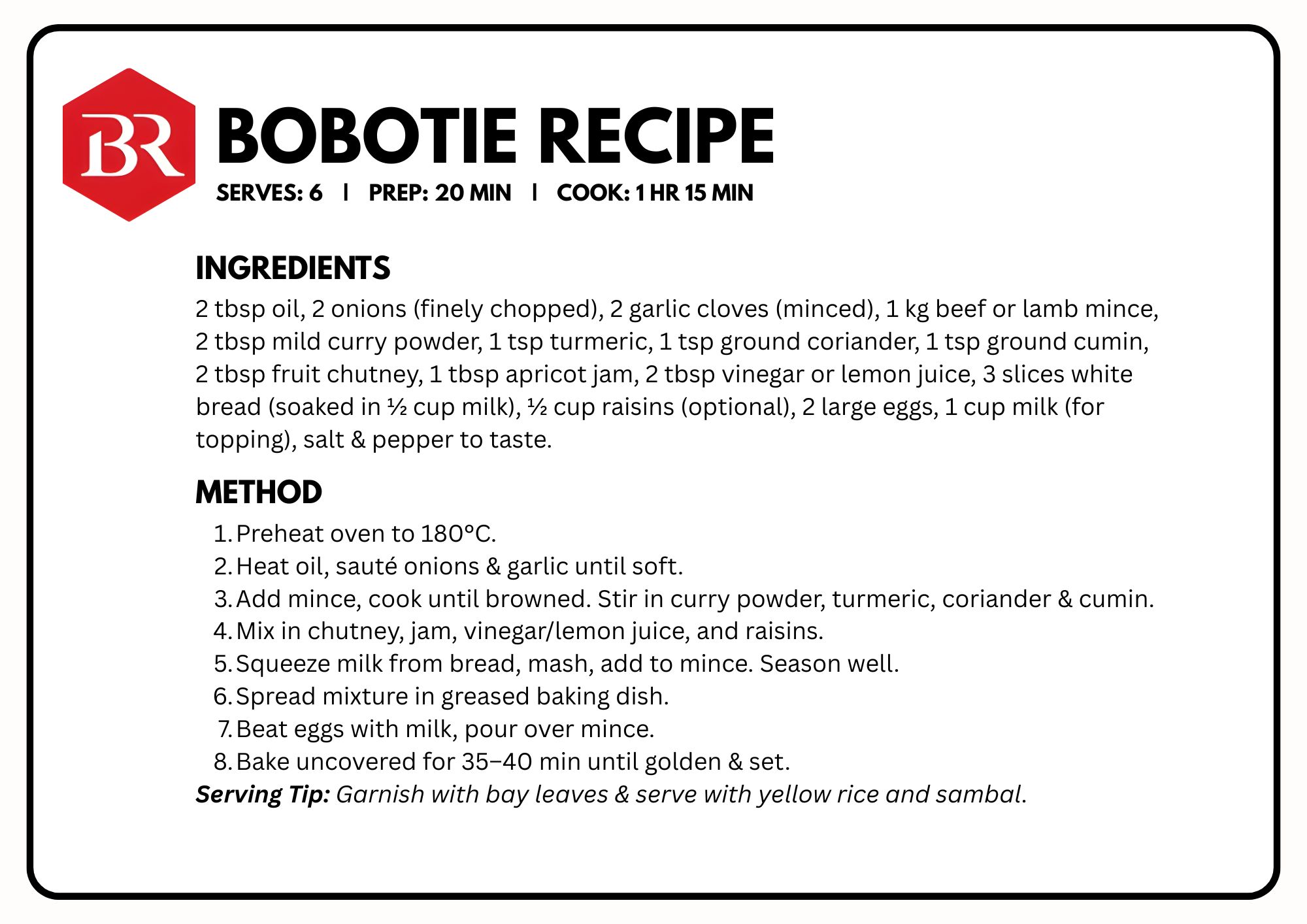
Bobotie Recipe
- Serves: 4–6
- Prep time: 20 mins
- Cook time: 50 mins
INGREDIENTS: For the Meat Mixture: • 2 tablespoons oil or butter • 1 onion, finely chopped • 2 garlic cloves, minced • 500g beef mince • 2 slices white bread (soaked in ½ cup milk, then squeezed out) • 1 tablespoon curry powder (medium) • 1 teaspoon turmeric • 1 teaspoon ground coriander • 1 tablespoon chutney (Mrs Ball’s or any fruit chutney) • 1 tablespoon apricot jam (optional but traditional) • 1 tablespoon vinegar or lemon juice • 2 teaspoons sugar • ½ teaspoon salt • ½ teaspoon black pepper • ¼ cup raisins or sultanas • 1 egg (beaten, for binding) • 2–3 bay leaves (for baking)
For the Custard Topping: • 1 cup milk • 2 eggs • Pinch of salt • Extra bay leaves (for garnish)
Instructions: Preheat oven to 180°C (350°F).
Prepare meat mixture:
- In a large pan, heat oil or butter and sauté the chopped onion until soft.
- Add garlic, curry powder, turmeric, and coriander. Cook for 1 minute to release aromas.
- Add mince and brown it well, breaking it apart as it cooks.
- Stir in soaked bread (squeezed dry and then mashed), chutney, jam, vinegar/lemon juice, sugar, salt, pepper, and raisins.
- Simmer gently for 10–15 minutes. Remove from heat.
- Stir in the beaten egg.
Bake meat base: • Spoon mixture into a greased baking dish. • Smooth the top and press in 2–3 bay leaves. • Bake for 25 minutes (uncovered).
Prepare custard topping: • Whisk milk, eggs, and a pinch of salt. • Pour the custard topping gently over the baked meat. • Garnish with 1–2 fresh bay leaves placed on top. • Return to oven and bake for 20–25 minutes, or until custard is golden and set.
Serve with: • Yellow rice (basmati with turmeric and raisins) • Chutney (Mrs Ball’s peach is classic) • Sambals (grated carrot, sliced banana, chopped tomato and onion) • Optional: toasted coconut or sliced almonds
A4 Printable Recipe | Recipe Card
Culture: South African Indian
About:
South Africa’s Indian culture describes Hindu (and some Sikh) immigrants from India who arrived during the colonial era. This group retains ties to their heritage but has also gradually integrated into the wider South African community, becoming more distinct from their geographically bound ancestors. Most speak an English dialect while older generations may speak Hindi or Tamil. Hindu festivals like Diwali and Tamil Tahi Poosam Kavady are widely celebrated and spices that mark many South African Indian dishes include fennel, turmeric, cloves, curry leaves, cardamom, cumin, chilli peppers, and a spice blend known as masala.
Traditional Dish: Chicken Biryani
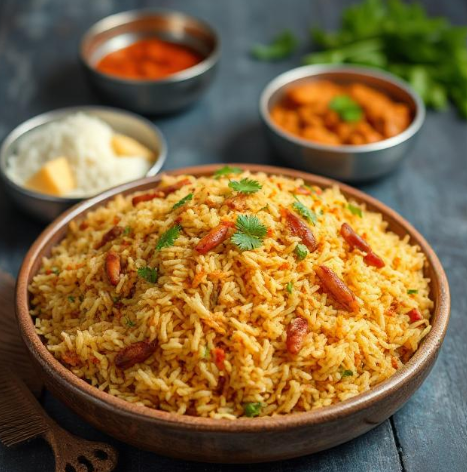
What it Tastes Like:
Biryani is a savoury dish that has a complex, aromatic flavour profile. It's characterised by the rich taste of spices (including garlic masala, cumin, and cinnamon), tender fall-off-the-bone meat, and fluffy, flavourful rice that does not clump together. It has subtle hints of sweetness (from the rose water or saffron) and a touch of heat.
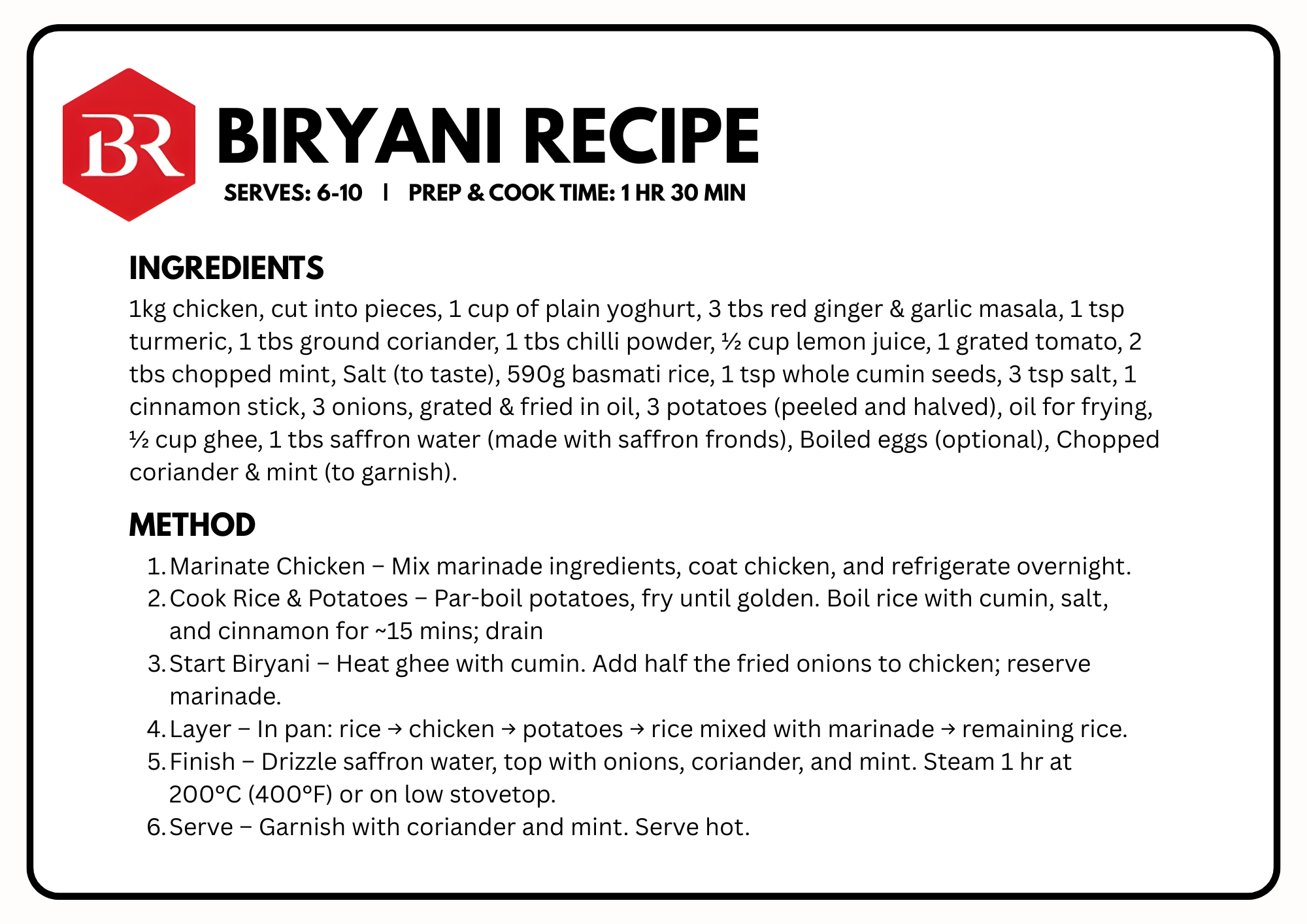
Briyani Recipe
• Serves: 6-10 people • Total time: Approximately 1 hour 30 minutes
INGREDIENTS: For the Marinade: • 1 kg chicken, cut into pieces • 1 cup of plain yoghurt • 3 tablespoons of red ginger and garlic masala • 1 teaspoon of turmeric • 1 tablespoon of ground coriander • 1 tablespoon of chilli powder • ½ cup of lemon juice • 1 grated tomato • 2 tablespoons of chopped mint • Salt, to taste
For the Rice: • 590 grams basmati rice • 1 teaspoon of whole cumin seeds • 3 teaspoons of salt • 1 cinnamon stick
Other Ingredients: • 3 onions, grated and fried in oil • 3 potatoes, peeled and halved • Oil for frying • ½ a cup of ghee • 1 tablespoon of saffron water (made with saffron fronds) • Boiled eggs (optional) • Chopped coriander, to garnish • Chopped mint, to garnish
Instructions:
- Marinate the Chicken: Combine all marinade ingredients in a large bowl and mix together thoroughly. Add the chicken pieces into this and coat them thoroughly. Let this sit overnight in the fridge for best results.
- Prepare the Rice: Par-boil the potatoes and fry them in oil until golden. In a separate pot, boil the rice with 1 teaspoon of cumin, salt, and the cinnamon stick for approximately 15 minutes, or until soft but still firm. Drain the rice and set it aside.
- Prepare the Biryani: Heat ½ cup of ghee in a large saucepan and add 1 teaspoon whole cumin. Add half of the fried onions directly to the marinated raw chicken. Shake off the marinade from the chicken and reserve it for later use.
- Layer the Dish: Place ½ cup of the cooked rice at the bottom of the saucepan. Add the marinated chicken on top, followed by the fried potatoes. Mix a little rice with the reserved chicken marinade and add it as another layer. Top with the remaining plain rice.
- Finish Cooking: Sprinkle the saffron water over the rice. Top with the remaining fried onions, coriander, and mint. Steam the biryani for about an hour in the oven at 200°C (400°F) or on a mini-oven stovetop over low heat.
- Serve: Garnish with fresh coriander and mint. Serve hot.
A4 Printable Recipe | Recipe Card
Culture: Afrikaans
About:
The Afrikaans culture in South Africa is rooted in the history of Dutch settlers, shaped over centuries by influences from indigenous African, Asian, and European traditions. It is best known for its language, Afrikaans, which developed from Dutch and is spoken widely across the country. The Afrikaans culture is reflected in strong family values, music (like boeremusiek), literature, and cuisine - favourites include biltong, braais, and koeksisters. Festivals, storytelling, and a love for the outdoors also play an important role. Today, the Afrikaans culture continues to evolve, balancing its traditions with the diversity of modern South Africa. This culture’s cuisine commonly uses spices such as cinnamon, cloves, nutmeg, allspice, coriander, and bay leaves - often blended to create warm, aromatic flavours.
Traditional Dish: Koeksisters
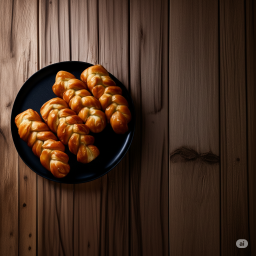
What it Tastes Like:
Koeksisters are sweet, sticky, deep-fried dough plaits soaked in cold syrup, giving them a crisp outside and a juicy, syrup-filled centre. They taste rich, sugary, and slightly spiced, with a satisfying balance of crunch and softness.
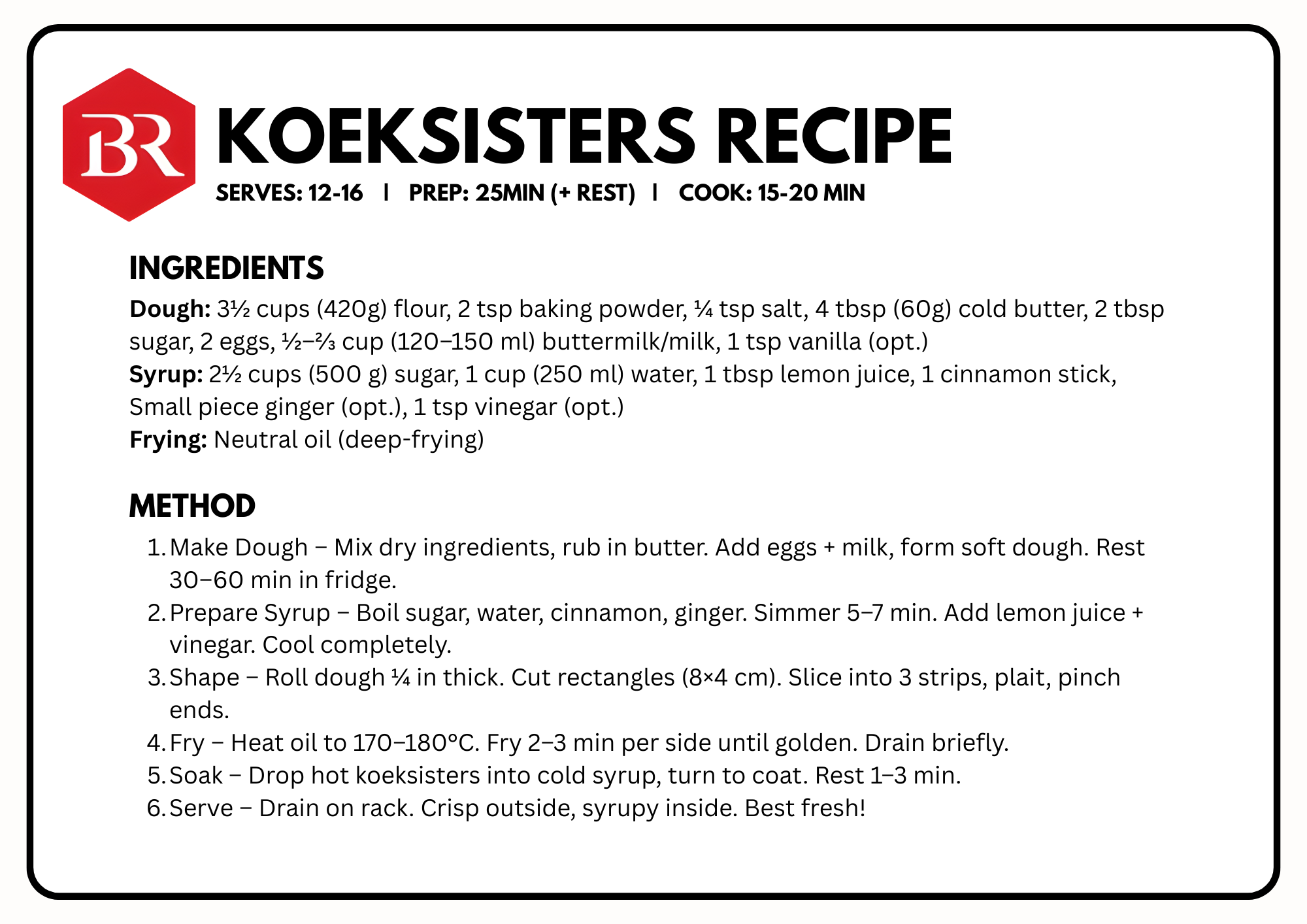
Koeksister Recipe
• Serves: 12–16 koeksisters • Prep: 25 minutes (+30–60 min resting) • Cook: 15–20 minutesIngredients
Dough • 420 g (3½ cups) plain/all-purpose flour • 2 tsp baking powder • ¼ tsp salt • 60 g (4 tbsp) cold unsalted butter, cubed • 2 tbsp granulated sugar • 2 large eggs • 120–150 ml (½–? cup) buttermilk or milk (adjust for consistency) • 1 tsp vanilla extract (optional)
Syrup • 500 g (2½ cups) granulated sugar • 250 ml (1 cup) water • 1 tbsp lemon juice • 1 cinnamon stick (or 1 tsp ground cinnamon) • 1 small piece fresh ginger or ¼ tsp ground ginger (optional) • 1 tsp white vinegar (optional — helps syrup set)
For frying • Neutral oil (vegetable/canola) — about 1.5–2 litres (enough for ~5–7 cm / 2–3 in deep frying)
Instructions:
- Make the dough: Whisk flour, baking powder, salt and sugar in a bowl. Rub in cold butter until mixture resembles coarse crumbs. Whisk eggs with 120 ml milk and vanilla, then add to dry mix and combine to a soft, slightly sticky dough; add extra milk if needed. Knead briefly until smooth. Cover and rest 30–60 minutes in the fridge (easier to roll).
- Prepare the syrup: In a saucepan combine sugar, water, cinnamon stick and ginger (if using). Bring to a boil, then simmer 5–7 minutes until sugar dissolves and syrup slightly thickens. Add lemon juice and vinegar, remove from heat and cool completely to room temperature (or cooler) — koeksisters are traditionally soaked in cold syrup so allow syrup to chill.
- Shape the koeksisters: Turn dough onto lightly floured surface. Roll to about 6–8 mm (¼–? in) thickness. Cut into rectangles roughly 8 cm × 4 cm (3¼ × 1½ in). Cut each rectangle into three parallel strips leaving one end joined (so you can plait). Braid/plait each set of three strips and pinch ends to seal.
- Heat oil & fry: Heat oil to 170–180°C (340–355°F). Fry koeksisters in small batches until golden brown, turning so they brown evenly (about 2–3 minutes per side). Don’t overcrowd. Remove with slotted spoon and drain briefly on paper towel just to remove excess oil.
- Soak in cold syrup: Immediately drop the hot koeksisters into the cold syrup, turning to coat. Leave for 1–3 minutes to soak through (longer for a juicier centre). Remove with tongs and transfer to a wire rack to drain. Sprinkle with extra granulated sugar if desired.
- Serve & store: Serve once syrup has set slightly - crisp outside, syrupy inside. Store in an airtight container at room temperature for up to 2 days (they’re best fresh).
Tips & Variations • Cold vs warm syrup: Traditional Afrikaner koeksisters are soaked in cold syrup for that crisp, syrup-filled contrast. Cape Malay “koeksisters” are a different, spiced, coconut-coated version. • Consistency: Dough should be soft but manageable — if it cracks while plaiting, add a teaspoon of milk. If too sticky, dust with a little flour. • Syrup flavouring: Add a dash of cardamom or a splash of orange flower water for a twist. • Coconut finish (optional): After soaking, roll briefly in desiccated coconut for a fusion touch (not traditional for the Afrikaner type). • Safety: Keep syrup cool and oil at steady temperature; test one piece first to check frying time.
A4 Printable Recipe | Recipe Card
Culture: Zulu
About:
Zulu culture in South Africa is one of the country’s largest and most vibrant cultural traditions, known for its strong sense of community, respect for elders, and deep-rooted heritage. It is celebrated through expressive music and dance, colourful beadwork, traditional attire, and ceremonies that honour ancestry and spirituality. Central to Zulu identity are the values of ubuntu (humanity and compassion), storytelling, and the preservation of oral history. Today, Zulu culture continues to thrive, blending ancient customs with modern influences while remaining a cornerstone of South Africa’s cultural landscape. Zulu cuisine traditionally relies on simple, earthy flavors rather than heavy spicing, but when spices are used, they often include chili, curry powder, garlic, ginger, cumin, and coriander, along with salt and pepper for seasoning. Many dishes also feature the natural flavor of ingredients like maize, beans, and meat, with chili adding heat and curry blends showing Indian influence in modern Zulu cooking.
Traditional Dish: Dombolo
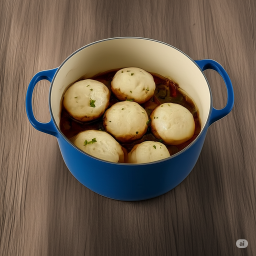
What it Tastes Like:
Dombolo is a traditional South African steamed bread that has a soft, fluffy texture with a slightly chewy bite and a mild, comforting flavour similar to plain white bread or dumplings. Its neutral taste makes it perfect for soaking up the rich, savoury flavours of stews, curries, or meat dishes that it’s often served with.
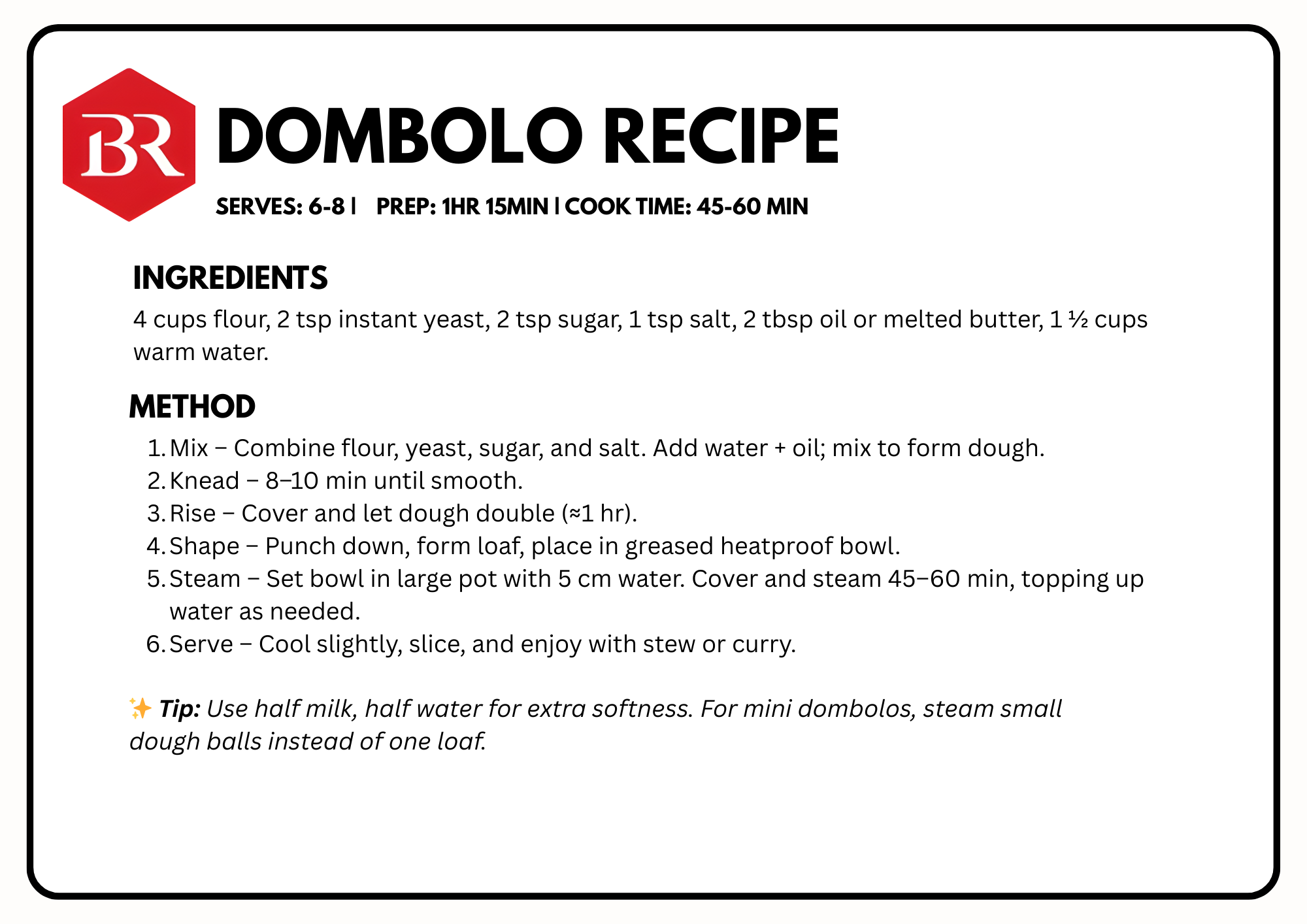
• Serves: 1 large loaf (6–8 servings) • Prep: 15 minutes (and 1 hour rising) • Cook time: 45-60 minutes
Ingredients: • 4 cups (500 g) cake flour / all-purpose flour • 2 tsp instant yeast • 2 tsp sugar • 1 tsp salt • 2 tbsp cooking oil or melted butter • 1½ cups (375 ml) warm water (or as needed)
Instructions:
- Mix Dough – In a bowl, combine flour, yeast, sugar, and salt. Add warm water and oil. Mix to form a soft dough.
- Knead – Knead on a floured surface for 8–10 minutes until smooth and elastic.
- Rise – Place dough in an oiled bowl, cover with a cloth, and let it rise in a warm spot for about 1 hour, or until doubled in size.
- Shape & Prepare – Punch down dough and shape into a round loaf. Place in a greased, heatproof metal or enamel bowl.
- Steam – Put the bowl into a large pot with about 5 cm (2 in) water at the bottom. Cover pot tightly with a lid. Steam over medium-low heat for 45–60 minutes, checking water level occasionally and topping up if needed.
- Serve – Remove carefully, cool slightly, and slice. Best enjoyed warm with a rich stew or curry.
Tips • For extra softness, replace half the water with warm milk. • You can make mini dombolos by shaping smaller balls of dough and steaming them in a colander or over a cloth inside the pot. • Avoid lifting the lid too often while steaming - this keeps the bread light and fluffy.