Vacuuming is one of those jobs everyone does and very few people do well. Most of us move too quickly, work in the wrong direction, and never touch the places that actually collect the most dust.
A few small changes make a noticeable difference to how clean your floors get and how long the job takes. Here are the tips worth knowing.
What You Will Find in This Guide
- How to prepare a room before you start
- The right order to work in
- Why slowing down cleans better
- How to handle stairs and tight spots
- Keeping your vacuum working properly
Prepare the Room First
Spend two minutes clearing the floor before you switch anything on. Lift chairs, move small furniture, pick up cables, toys and anything else that will interrupt you.
Vacuuming around obstacles leaves patches behind and slows you down far more than moving them would have.
This step also matters if you use a robot vacuum cleaner, which cleans best in a clear, uncluttered space.
Work From Top to Bottom, and Back to Front
Dust falls. If you are dusting surfaces or wiping skirting boards, do that before you vacuum, not after, or you will simply be spreading the mess back onto clean floors.
Then work from the far corner of the room back towards the door. This keeps you off the floor you have already cleaned and stops you walking footprints back through it.
In carpeted rooms, finish by running the vacuum in a single direction so the pile lies evenly.
Slow Down and Overlap Your Passes
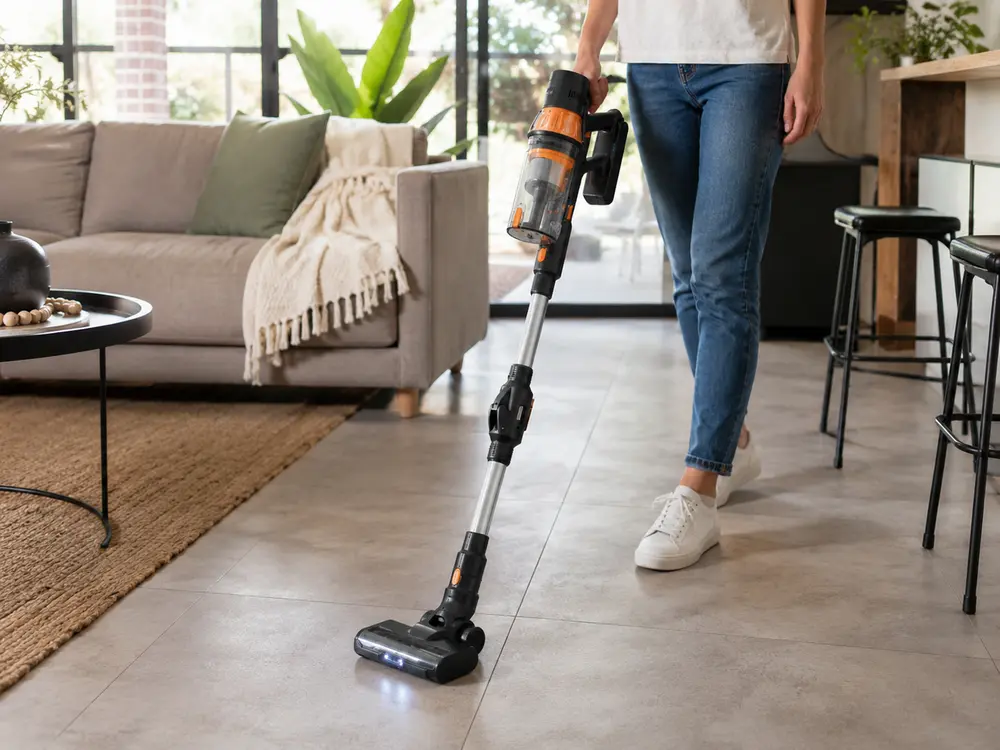 This is the mistake almost everyone makes.
Pushing the vacuum quickly back and forth gives the suction no time to lift embedded dirt out of a carpet.
Move slowly and deliberately, and overlap each pass by about half the width of the head so you are never leaving untouched strips behind.
High-traffic areas deserve a second pass at a different angle.
Stairs and Tight Spots
Stairs are where a full-size vacuum becomes a nuisance. A cordless vacuum cleaner is far easier here, and one that converts to handheld is easier still.
The Bennett Read Fusion 2.0 switches from upright to handheld in seconds and runs for up to 40 minutes on a charge, which is more than enough for a staircase, a car interior or a quick clean-up between rooms.
Its LED Dust-Spotter lights are genuinely useful for seeing what you have missed under furniture.
For skirting boards, corners and the gaps beside appliances, fit the crevice tool.
For wet spills, a mop is not the answer. The Bennett Read Tough 12 switches from dry vacuuming to wet with an interchangeable nozzle and handles spills, workshop mess and garage clean-ups without complaint.
Let a Robot Handle the Daily Upkeep
The easiest way to keep floors clean is to stop letting dust build up with a robot vacuum cleaner .
The Bennett Read AlphaBot robot vacuum runs on a schedule you set through the Smart Life app, cleans while you are out, and returns to its charging station on its own.
Its HEPA filtration and quiet brushless motor mean it can run in the background without disrupting the house.
Daily light cleaning means far less work when you do a proper vacuum.
Look After the Vacuum Itself
Suction drops long before most people notice.
Empty the dirt container regularly rather than waiting until it is full, wash reusable filters and let them dry completely before refitting, and check the brush head for tangled hair or thread.
A well-maintained Bennett Read vacuum cleaner performs like new for years.
Better vacuuming is not about working harder.
Clear the room, work top to bottom and back to front, slow your passes down, use the right tool for stairs and tight spots, and keep the machine itself in good order.
Whether you want a cordless vacuum for quick clean-ups, a wet and dry model for bigger messes, or a robot to handle the daily upkeep, the Bennett Read vacuum range has something built for the job.
Explore the full range of vacuums and floorcare range online now.
FAQ
What is the vacuum cleaning process?
Start by clearing the floor of clutter and small furniture. Dust surfaces first so anything that falls gets picked up.
Vacuum from the far corner back towards the door, moving slowly and overlapping each pass. Finish with edges, corners and tight spots using the crevice tool, then empty the container and check the filter.
How do you use a vacuum cleaner?
Choose the right setting for your floor type, as carpets and hard floors need different heads or modes.
Push the vacuum forward slowly and pull it back over the same strip, overlapping each pass. Do not rush, as suction needs time to lift dirt.
Empty the dirt container regularly to maintain performance.
How do you vacuum steps?
Use a handheld or cordless vacuum, as a full-size upright is awkward and unsafe on stairs.
Work from the top step downwards so dust falls onto steps you have not cleaned yet.
Vacuum the flat tread first, then the vertical riser, and use the crevice tool along the edges where dust gathers.
How do you vacuum in tight spots?
Fit the crevice tool for narrow gaps such as skirting boards, corners, and the spaces beside appliances and furniture.
A dusting brush works better on vents, sills and upholstery.
A cordless vacuum that converts to handheld makes these areas much easier to reach than dragging a full-size machine around.